

17 min read
Best Fiber for IBS: What Helps Constipation, Diarrhea, and Bloating?
By: Cami Eastman, RDN, LD on 11/01/2026
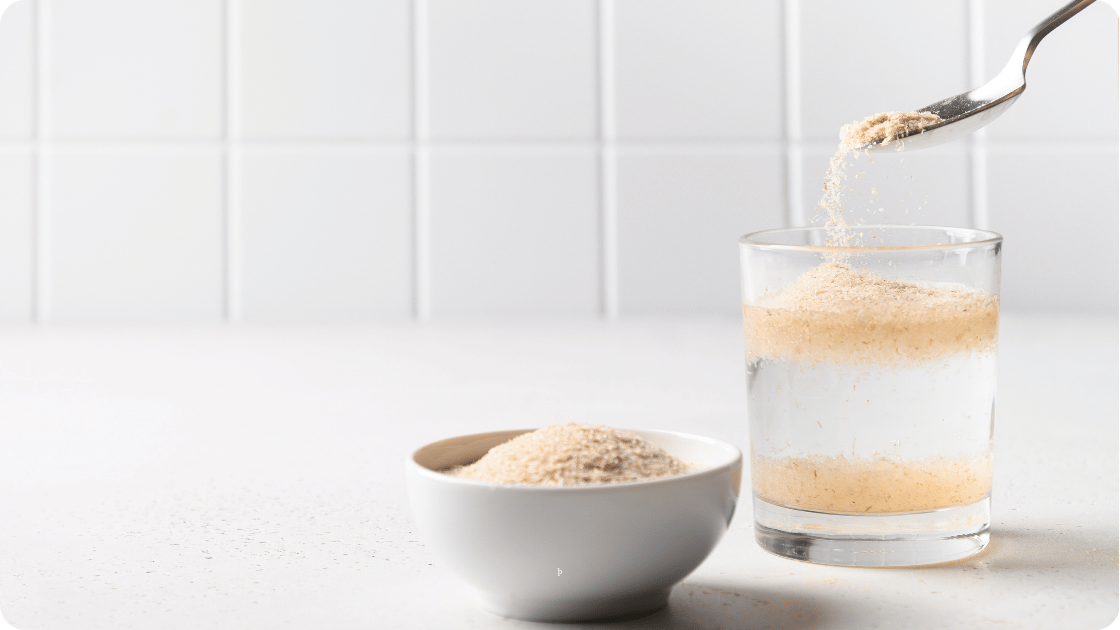
If you have irritable bowel syndrome (IBS), you've probably been told to eat more fiber. It's common advice, especially if constipation is one of your main symptoms. But if you've ever increased your fiber intake only to experience more bloating, gas, or abdominal discomfort, you know that adding fiber doesn't always make you feel better.
That's because not all fiber behaves the same way in your digestive system. Some types help soften stool and improve bowel regularity. Others are rapidly fermented by gut bacteria, which can increase gas production and make IBS symptoms worse.
Research suggests that the type of fiber you consume, how much you take, and how quickly you increase it can matter more than simply reaching a daily fiber target. Let's look at the different types of fiber, what research says about their effectiveness for IBS, and how to introduce fiber without making digestive symptoms worse.
Why Does Fiber Matter for IBS?
Fiber is a type of carbohydrate that isn't fully digested or absorbed in the small intestine. It plays several important roles in digestive health, including helping regulate bowel movements, supporting stool consistency, and providing fuel for certain gut bacteria.
But IBS can complicate how your digestive system responds to fiber. People with IBS may experience changes in intestinal movement, increased sensitivity to gas and stretching, and differences in how the gut and brain communicate. This means a normal amount of gas or intestinal stretching can cause significant discomfort for someone with IBS.
And when certain fibers are fermented by gut bacteria, the additional gas can contribute to bloating, pressure, and abdominal pain. The goal isn't necessarily to eat as much fiber as possible. It's to find the types and amounts that support your digestion without worsening symptoms.
Soluble vs. Insoluble Fiber: What's the Difference?
Fiber is often divided into two categories: soluble and insoluble. This is a useful starting point, but it doesn't tell the whole story.
Soluble fiber
Soluble fiber dissolves or disperses in water. Some types form a gel that helps hold water in the digestive tract. Depending on the specific fiber, this can help soften hard stools, improve stool consistency, and support more regular bowel movements.
Sources include:
- Psyllium husk
- Oats and barley
- Certain fruits
- Beans and lentils
- Some fiber supplements
However, not all soluble fibers behave alike. Some are rapidly fermented and may increase gas, while others resist fermentation and are generally better tolerated.
Insoluble fiber
Insoluble fiber doesn't dissolve in water and often contributes to stool bulk.
It's found in foods such as:
- Wheat bran
- Whole-grain wheat products
- Vegetable skins
- Nuts and seeds
- Certain vegetables
Insoluble fiber can be helpful for bowel regularity in some people, but coarse wheat bran has not consistently improved overall IBS symptoms in clinical trials. It may also aggravate bloating or abdominal discomfort in some individuals.
This doesn't mean people with IBS need to avoid every food containing insoluble fiber. Most plant foods contain a mixture of fiber types, and individual tolerance varies. The concern is with assuming that large amounts of wheat bran or other coarse fibers are automatically beneficial for IBS.
Why Fermentability Matters Just as Much as Fiber Type
One of the most important factors in IBS fiber tolerance is fermentability. Fermentation happens when gut bacteria break down certain fibers in the colon.
This process can produce beneficial compounds called short-chain fatty acids, which help support intestinal health. But fermentation also produces gas. For someone with IBS, particularly someone who experiences bloating or abdominal pain, that gas can contribute to symptoms.
Three fiber properties are especially relevant:
- Solubility: Whether the fiber dissolves or disperses in water.
- Viscosity: Whether it forms a thick gel that helps retain water.
- Fermentability: How readily gut bacteria break it down and produce gas.
A fiber that's soluble, gel-forming, and poorly fermented may be especially useful because it can improve stool consistency without generating as much gas.
Psyllium is the best-studied example.
What Is the Best Fiber for IBS?
According to the American College of Gastroenterology (ACG), soluble fiber—particularly psyllium—is recommended for improving overall IBS symptoms, while insoluble wheat bran is not.
A 2026 systematic review and meta-analysis involving 30 randomized controlled trials and approximately 1,900 adults with IBS found that fiber supplementation modestly improved the likelihood of a clinical response.
However, the clearest benefit was concentrated in studies using psyllium. That doesn't mean psyllium works for everyone or that other fibers are never helpful. It means psyllium currently has the strongest clinical evidence.
Here's how commonly used fiber supplements compare.
1. Psyllium Husk: The Best-Studied Fiber for IBS
Psyllium, also called ispaghula husk, is a soluble, gel-forming fiber that's only slowly or minimally fermented. It's commonly found in supplements such as Metamucil, although formulations vary.
Psyllium absorbs water and forms a gel in the digestive tract. This can help soften hard stools and improve stool consistency. Its water-holding properties may also be helpful when stools are loose, although the strongest IBS-specific recommendations are generally directed toward constipation-predominant symptoms.
How much psyllium should you take?
A reasonable starting approach for many adults is:
- Start: Approximately 3–5 grams of psyllium husk daily.
- Increase: Gradually after several days to a week if tolerated.
- Common trial range: Approximately 10 grams daily, sometimes divided into two doses.
Some studies have used higher doses, but more isn't necessarily better. Product labels differ in how they report grams of husk versus grams of dietary fiber, so check the serving information rather than assuming all powders or capsules provide the same amount.
Always mix psyllium with the amount of fluid directed on the label and drink it promptly. Never swallow dry psyllium powder.
Best suited for: IBS-C and people seeking a first-line fiber supplement with the strongest evidence for overall IBS symptom improvement.
2. Methylcellulose: A Potential Alternative for Gas-Sensitive IBS
Methylcellulose is a modified, plant-derived soluble fiber found in products such as Citrucel. Unlike many other fibers, methylcellulose is not readily fermented by gut bacteria. That means it's less likely to contribute to fermentation-related gas. It also helps retain water in the digestive tract.
What does the research show?
A 2026 placebo-controlled study using gastrointestinal MRI found that methylcellulose increased water content and volume in the colon. These findings help explain why it may be useful for stool hydration.
However, studies demonstrating changes in intestinal water content aren't the same as trials showing improvements in IBS symptoms. Large, high-quality clinical trials specifically evaluating methylcellulose for IBS remain limited.
How much should you take?
For adults considering methylcellulose:
- Start with the lowest recommended serving on the product label.
- Increase gradually based on stool consistency and tolerance.
- Follow the product's fluid and maximum-dose instructions.
Because methylcellulose products come in different forms and strengths, there isn't one well-established IBS-specific dose that applies to every formulation.
Best suited for: People with IBS-C who have difficulty tolerating psyllium or are particularly sensitive to gas and bloating.
3. Partially Hydrolyzed Guar Gum (PHGG): Promising for Bloating
Partially hydrolyzed guar gum, or PHGG, is a soluble, low-viscosity fiber commonly sold as Sunfiber. Unlike psyllium, PHGG doesn't form a thick gel. It is fermented by gut bacteria, but its fermentation characteristics may make it better tolerated than some rapidly fermented prebiotic fibers.
What does the research show?
A randomized controlled trial published in 2015 found that PHGG improved bloating and the combination of bloating and gas compared with placebo over three months. However, the study didn't find significant improvements in abdominal pain, stool frequency, quality of life, or overall IBS severity.
Other small studies have suggested possible benefits for bowel habits, but the evidence is less consistent than it is for psyllium.
How much PHGG should you take?
A practical approach is:
- Start: Approximately 2–3 grams daily.
- Increase: Gradually over one to two weeks if tolerated.
- Commonly studied amount: Around 5–6 grams daily, depending on the study.
These starting and titration amounts are practical suggestions, not a clinically validated dosing schedule.
Best suited for: People whose IBS symptoms are dominated by bloating and gas, particularly when other fiber supplements haven't been well tolerated.
4. Inulin and Chicory Root Fiber: Why More Can Mean More Bloating
Inulin is a soluble, fermentable prebiotic fiber found naturally in foods such as chicory root, onions, garlic, and certain other plants. It's also added to many protein bars, cereals, yogurts, and fiber supplements.
You may see it listed on ingredient labels as:
- Inulin
- Chicory root fiber
- Chicory root extract
- Fructooligosaccharides (FOS)
Inulin can support the growth of certain gut bacteria, but it's also a fructan—a type of fermentable carbohydrate included in the FODMAP category. For people with IBS, particularly those sensitive to fructans, inulin can increase bloating, gas, and abdominal discomfort.
What does the research show?
A systematic review of prebiotic supplements in IBS found no consistent improvement in overall symptoms, abdominal pain, bloating, or quality of life. The newer fiber meta-analysis also didn't identify a clear benefit from inulin-type fructans.
This doesn't mean inulin is harmful or that everyone with IBS needs to avoid foods naturally containing it. But adding large amounts of concentrated inulin isn't an evidence-based strategy for improving overall IBS symptoms.
How much inulin should you take?
There isn't an established effective inulin dose for IBS. If you're sensitive to bloating or fructans, it may be more useful to avoid adding a concentrated inulin supplement than to try to work up to a high dose.
If you choose to trial it, consider starting with a very small amount, such as 1 gram daily, and assessing tolerance before increasing. This is a cautious practical suggestion, not a proven therapeutic dose.
Best suited for: Not generally a first-choice fiber supplement for IBS, particularly when bloating or FODMAP sensitivity is a major concern.
5. Other Fiber Supplements: What Does the Evidence Say?
Several other fibers are marketed for digestive health, but IBS-specific research is limited.
|
Fiber |
How it works |
Evidence for IBS |
|
Acacia fiber (gum arabic) |
Soluble, slowly fermented |
May be tolerated by some people, but IBS-specific clinical evidence is insufficient. |
|
Glucomannan (konjac) |
Highly viscous and water-absorbing |
No convincing evidence of IBS symptom improvement. Requires careful fluid intake. |
|
Beta-glucan (oats and barley) |
Soluble, gel-forming fiber |
Well-supported for cholesterol benefits, but limited direct evidence as an IBS treatment. |
|
Calcium polycarbophil (FiberCon) |
Nonfermentable, water-absorbing bulking agent |
Limited evidence from a very small IBS trial; a possible alternative when gas is a concern. |
|
Soluble corn fiber |
Soluble, generally non-viscous, fermentable |
Insufficient IBS-specific evidence to recommend it for symptom relief. |
|
Ground flaxseed |
Contains soluble and insoluble fiber |
May help bowel regularity, but evidence for improving IBS symptoms is limited. |
These fibers aren't necessarily ineffective. Rather, we don't yet have enough high-quality research to say they reliably improve IBS symptoms.
This distinction matters when comparing supplements that make similar digestive-health claims.
Fiber for IBS-C vs. IBS-D: Does the Type of IBS Matter?
IBS is commonly divided into subtypes based on bowel habits:
- IBS-C: Constipation-predominant IBS
- IBS-D: Diarrhea-predominant IBS
- IBS-M: Mixed bowel habits, including constipation and diarrhea
Your symptoms can help guide which fiber to try.
IBS-C: Constipation-predominant IBS
Psyllium is generally a reasonable first option because it holds water and can help improve stool consistency. If psyllium isn't tolerated, methylcellulose or calcium polycarbophil may be considered, although the IBS-specific evidence is much weaker.
IBS-D: Diarrhea-predominant IBS
Gel-forming fibers such as psyllium may help improve loose stool consistency by retaining water within the gel. However, the evidence for improving overall IBS-D symptoms specifically is less established.
If diarrhea is persistent, fiber alone may not adequately address the underlying problem.
IBS-M: Mixed bowel habits
A gel-forming fiber may be useful because of its stool-normalizing properties. But the goal should be to assess how symptoms respond rather than assuming that increasing fiber will improve both constipation and diarrhea.
Important: Most IBS fiber studies haven't provided enough subtype-specific data to confidently identify a different best supplement for every IBS subtype.
How Much Fiber Should You Eat if You Have IBS?
General adult fiber recommendations are commonly around 25–30 grams per day, depending on age, sex, and energy needs. But those targets are designed for overall health, not as a treatment dose for IBS.
Someone with IBS may experience significant discomfort if they rapidly increase from a low-fiber diet to 30 grams per day. And someone already consuming plenty of fiber may not benefit from adding more.
Instead of focusing exclusively on a number, consider:
- Your current fiber intake
- Your usual bowel habits
- Whether bloating or abdominal pain is a major concern
- The types of fiber you're consuming
- How your symptoms respond to changes
A daily fiber target should guide nutritional adequacy, not become a number you force yourself to reach despite worsening symptoms.
How to Increase Fiber Without Making IBS Symptoms Worse
The most important principle is simple: Start low and increase slowly. Rapidly increasing fiber, particularly fermentable fiber, can lead to more gas, bloating, and abdominal discomfort.
Here's a practical approach.
Step 1: Choose one fiber to trial
If you're considering a supplement, begin with one product rather than combining several. This makes it easier to identify whether the fiber is helping or contributing to symptoms.
Psyllium is a reasonable first choice for many people because it has the strongest evidence.
Step 2: Start with a small dose
For psyllium, this may mean approximately 3 grams daily. For PHGG, a starting amount of 2–3 grams may be appropriate.
For other supplements, use the lowest labeled dose or follow individualized guidance from your healthcare provider.
Step 3: Increase gradually
If symptoms remain stable, consider increasing the dose after several days to a week. For people who are particularly sensitive to bloating, waiting one to two weeks between increases may be more comfortable.
An example psyllium progression might look like this:
|
Time |
Example daily amount |
|
Week 1 |
3 g |
|
Week 2 |
5 g |
|
Week 3 |
7–8 g |
|
Week 4 |
10 g, if needed and tolerated |
This is an illustrative titration schedule, not a dosing protocol proven superior in clinical trials. You may not need to reach 10 grams. If a lower dose helps your symptoms, there's no reason to increase it simply to reach a target.
Step 4: Pay attention to hydration
Gel-forming fibers absorb water, so it's important to take them with sufficient fluid. Follow the product's mixing instructions, particularly for psyllium and other highly water-absorbing fibers.
People with swallowing difficulties, suspected bowel obstruction, or certain gastrointestinal conditions should seek medical guidance before using bulk-forming fiber supplements.
Step 5: Monitor symptoms, not just fiber grams
Pay attention to changes in:
- Stool frequency
- Stool consistency
- Straining
- Abdominal pain
- Bloating
- Gas
- Sense of complete evacuation
If symptoms worsen after a dose increase, return to the previous tolerated dose or pause the supplement rather than continuing to increase it. A simple symptom record over several weeks can help identify patterns without requiring detailed food tracking.
Should You Get Fiber From Food or Supplements?
Both can have a place. Fiber-rich foods provide vitamins, minerals, and other nutrients in addition to fiber. Foods such as oats, berries, kiwi, potatoes, nuts, and seeds may fit into an IBS-friendly eating pattern depending on individual tolerance and portion size.
However, food sources often contain a mixture of fiber types and other fermentable carbohydrates. For example, beans and lentils provide fiber and protein, but they also contain galacto-oligosaccharides (GOS), which may contribute to gas in some people with IBS.
That doesn't mean you need to avoid them. Smaller portions, canned and rinsed legumes, and gradual introduction may improve tolerance.
Fiber supplements can be useful when someone needs a more predictable amount or type of fiber. The goal isn't to choose between food and supplements permanently. It's to find a combination that supports digestion, nutritional adequacy, and food variety.
Can You Take Fiber Supplements While Following a Low-FODMAP Diet?
Yes, but the type of fiber matters. A low-FODMAP diet temporarily reduces certain fermentable carbohydrates that may contribute to IBS symptoms. Some fiber supplements, particularly inulin and FOS, contain fermentable carbohydrates that may worsen symptoms during the elimination phase.
Psyllium and methylcellulose are generally more compatible options because they're poorly fermented. PHGG may also be tolerated by some people, although individual responses vary.
If you're following a low-FODMAP diet, it's important to continue incorporating tolerated fiber sources. And remember that the low-FODMAP elimination phase is intended to be temporary, followed by structured reintroduction and personalization.
The goal is to identify your individual triggers while maintaining as much dietary variety as possible.
When More Fiber Isn't the Answer
Fiber can be helpful, but it isn't a universal solution for IBS. If constipation is related to pelvic floor dysfunction, for example, simply adding more fiber may not resolve difficulty passing stool. Likewise, persistent diarrhea, significant abdominal pain, or severe bloating may require additional evaluation and treatment.
If you're already consuming adequate fiber and symptoms continue, increasing the amount may not provide additional benefit. It's also important to seek medical evaluation for symptoms such as blood in the stool, unexplained weight loss, anemia, persistent vomiting, or new and progressively worsening gastrointestinal symptoms.
These aren't symptoms to manage by experimenting with fiber supplements alone.
The Bottom Line: The Right Fiber Matters More Than More Fiber
Fiber can be a useful part of IBS management, but not all types work the same way. Psyllium has the strongest evidence for improving overall IBS symptoms, while other fibers, including methylcellulose and PHGG, may be reasonable alternatives depending on individual symptoms and tolerance.
Rapidly fermentable fibers such as inulin can increase gas and bloating, particularly for people who are sensitive to FODMAPs. The most useful approach is to choose an appropriate fiber, start with a small amount, increase gradually, and assess how your body responds.
You don't need to force yourself to eat more fiber if doing so consistently makes you feel worse. And you don't need to eliminate every food that causes occasional gas. The goal is better symptom management, adequate nutrition, and a more comfortable relationship with food—not achieving the highest possible fiber intake.
Need Help Managing IBS Without Unnecessary Food Restrictions?
IBS can make eating feel complicated, especially when advice about fiber, FODMAPs, and digestive health seems contradictory.
At Nutrition Ally, we take an individualized, evidence-based approach to digestive health. We help you identify which foods and fiber sources work for your body while supporting nutritional adequacy and maintaining as much food variety as possible.
Schedule a free discovery call to learn more about IBS nutrition counseling.
References:
-
ACG Clinical Guideline: Management of Irritable Bowel Syndrome. The American Journal of Gastroenterology. 2021. Lacy BE, Pimentel M, Brenner DM, et al.
-
AGA Clinical Practice Update on the Role of Diet in Irritable Bowel Syndrome: Expert Review. Gastroenterology. 2022. Chey WD, Hashash JG, Manning L, Chang L.
-
Fiber Supplementation in Irritable Bowel Syndrome: A Systematic Review and Meta-Analysis of Randomized Controlled Trials. Gastroenterology. 2026. Staudacher HM, Rucco V, Mancell S, Dimidi E, Whelan K.
-
American College of Gastroenterology Monograph on Management of Irritable Bowel Syndrome. The American Journal of Gastroenterology. 2018. Ford AC, Moayyedi P, Chey WD, et al.
-
Dietary fibre in gastrointestinal health and disease. Nature Reviews. Gastroenterology & Hepatology. 2021. Gill SK, Rossi M, Bajka B, Whelan K.
-
Irritable bowel syndrome. Yamada's Textbook of Gastroenterology 7e. 2022. Elizabeth J. Videlock, Lin Chang
-
Clinical Trial: Randomised Placebo‐Controlled Trial of Methylcellulose and Psyllium Gels on Inulin‐Induced Colonic Gas. Alimentary Pharmacology & Therapeutics. 2026. Dellschaft N, Alhasani A, Reid JESJ, et al.
-
Dietary Management of Irritable Bowel Syndrome: Considerations, Challenges, and Solutions. The Lancet. Gastroenterology & Hepatology. 2024. Whelan K, Ford AC, Burton-Murray H, Staudacher HM.
-
Randomized clinical study: Partially hydrolyzed guar gum (PHGG) versus placebo in the treatment of patients with irritable bowel syndrome. Nutrition & Metabolism. 2015. Niv E, Halak A, Tiommny E, et al.